Call for Abstracts
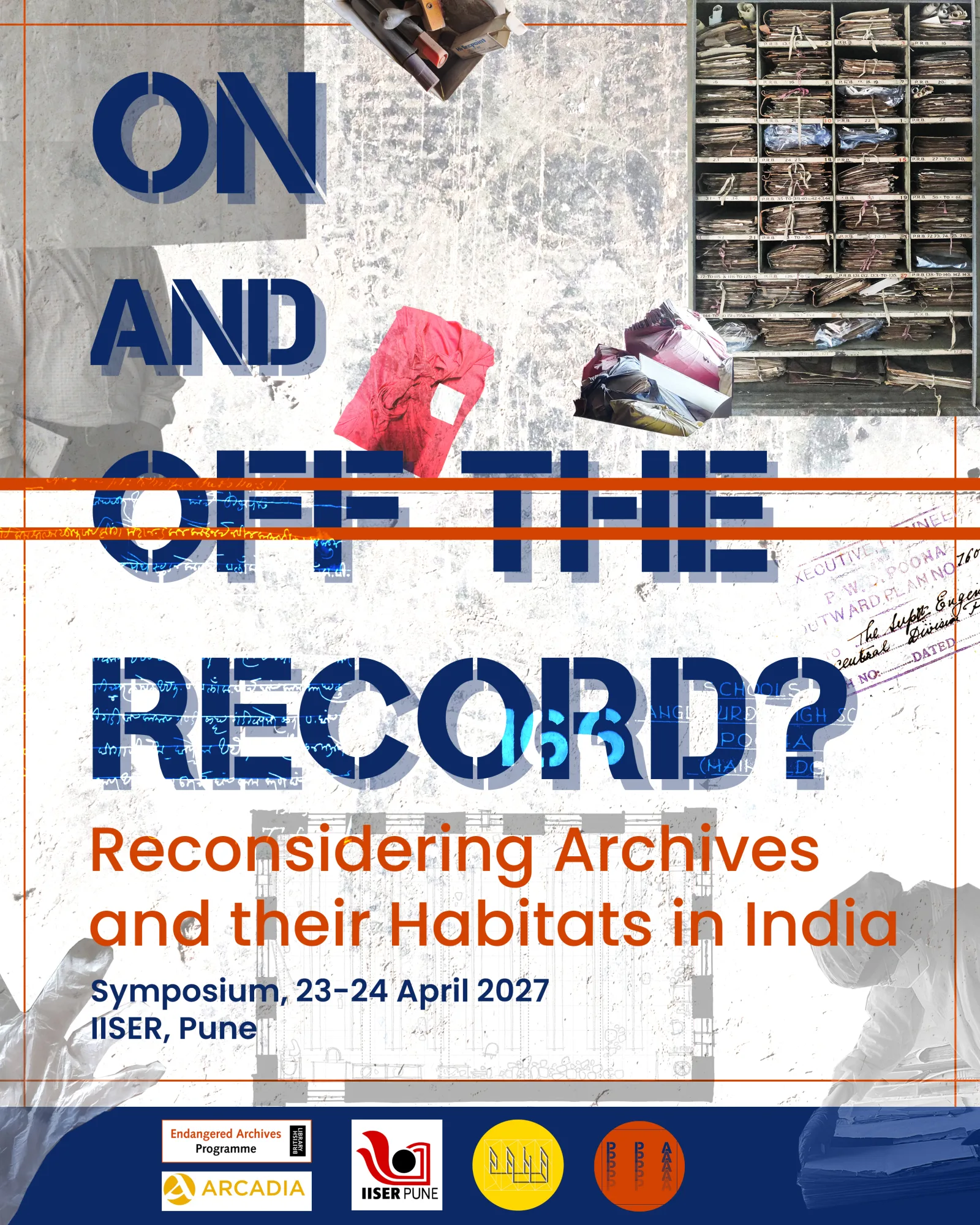
On and Off the Record? Reconsidering Archives and their Habitats in India
23–24 April 2027, IISER PUNE
“I treat archives not as repositories of state power but as unquiet movements in a field of force, as restless realignments and readjustments of people and the beliefs to which they were tethered, as spaces in which the senses and the affective course through the seeming abstractions of political rationalities.”— Ann Laura Stoler, Along the Archival Grain: Epistemic Anxieties and Colonial Common Sense (2009).
This symposium seeks to explore the concept of archiving-as-process rather than archives-as-things (Ann Laura Stoler, 2009), and invites contributions that look beyond archival contents to consider the spaces, practices, relationships and personal encounters through which archives in India are constituted and experienced.
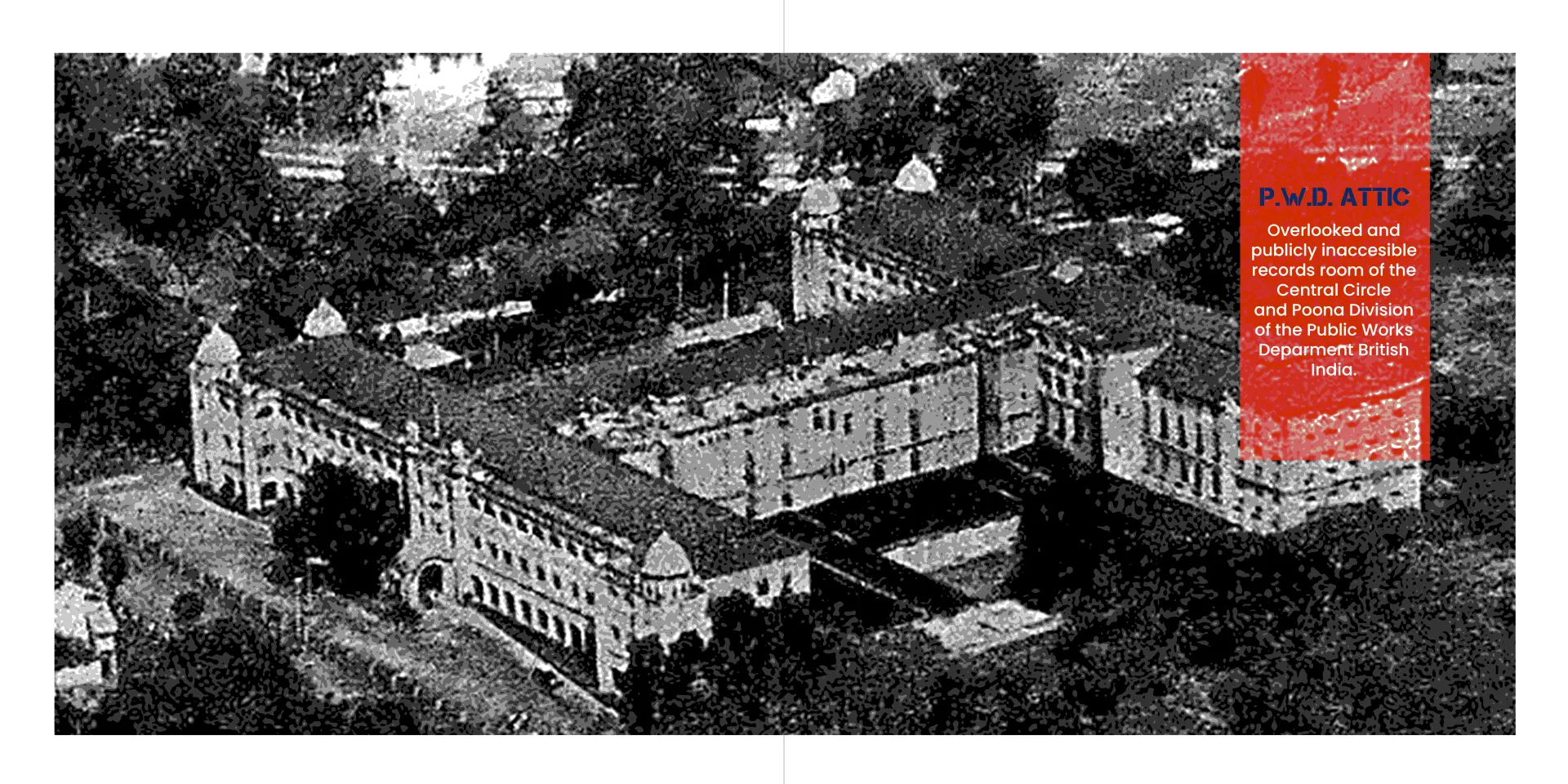
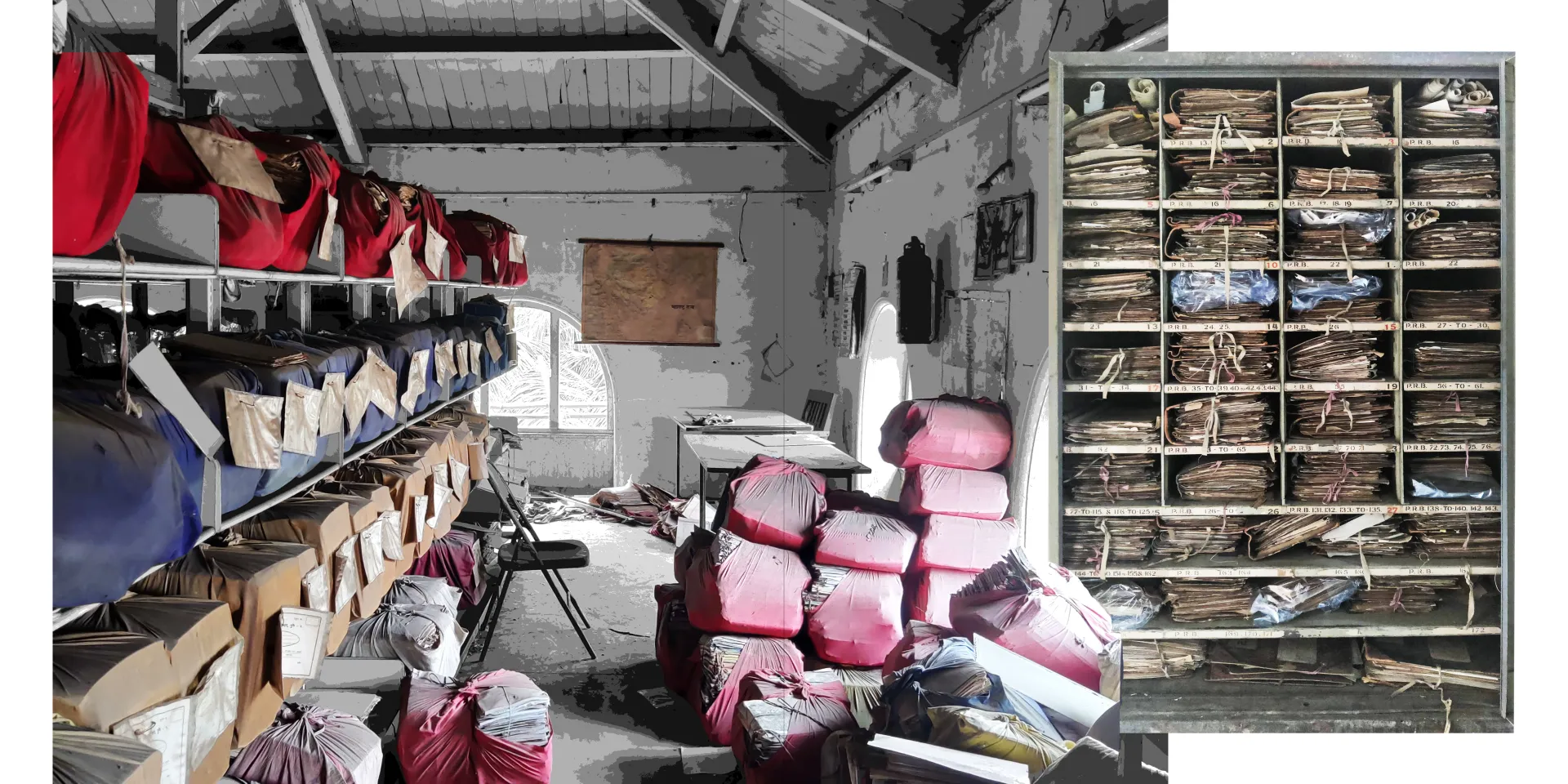
Our ongoing engagement with the historical Public Works Department (PWD) records of Pune through the Poona PWD Archives digitisation project has led us to perceive the archive as more than a space that stores historical records. It is an environment shaped by memory, material conditions and infrastructures, everyday practices and the people who create, organise, maintain and encounter archival collections. Unexpected discoveries, curiosity and serendipity play a role in the ways researchers navigate archives and develop new lines of inquiry (Kirsch & Rohan, 2008). And as Rachel Lee noted, archival habitats (2020) are physically experienced through sensory encounters, everyday interactions and the affective dimensions of both archival materials and their spaces of containment. Reading the archive through these dimensions offers ways of understanding not only their provenance but also the diverse and changing experiences through which people continue to engage with archives. In a context where archives are increasingly born digital or made available online, questions then arise as to what forms of knowledge get lost when archives lose their materiality.
Maintaining archives-as-environments and archiving-as-process as the central sites of investigation, we welcome investigations of archives across different scales and settings, from personal and community collections to corporate and state archives
Contributions may address one or more of the following lines of inquiry but need not be limited to them:
1. Archival Infrastructures: Spaces, Materials and Systems
How are archives shaped by their physical environments, material conditions and systems of arrangement? This theme invites studies of the physical/ spatial organisation of archival spaces, storage and preservation, cataloguing and classification, and infrastructures through which collections are maintained.
2. Archives from Below: Labour, Practices and Everyday Life
What people, practices and forms of labour sustain archives, and how do they shape archival knowledge? This theme considers the everyday work of creating, collecting, maintaining, organising and accessing records; informal and undocumented practices such as gatekeeping; and personal, communal, institutional memories associated while working in the archives. This theme is also interested to explore the relationships between the archival space, archival systems and the people and presence of other non-human inhabitants such as rats, silverfish, fungi — living beings who work within or encounter them.
3. People and Policy: Institutions, Power and Access
How do personal or institutional priorities, procedures and policies, and cataloguing shape the life of an archive? Contributions may examine processes of access, governance, protocols, classification and exclusion, ownership, custodianship, and responsibilities associated with preserving and sharing collections. This theme invites critical reflections on how decisions about what to collect, retain, describe, disclose or restrict shape what becomes part of the historical record and what remains inaccessible.
4. Encounters with Archives: Users, Methods and Knowledge Production
How do archivists, custodians, researchers and other users encounter, navigate and interpret archives? This theme welcomes reflections on archival research methods, sensory and affective encounters, curiosity and serendipity, unexpected discoveries, research journeys, and the forms of knowledge generated through working with physical collections and digital archives. Inspired by Kirsch and Rohan’s (2008) exploration of the movement from chance encounters to scholarly research, it considers how researchers’ questions, hunches and encounters with archival material can redirect investigations and open up new avenues of inquiry.
5. Digital Archives: Born digital, Digitisation, Access and Silences
What gets lost, obscured or silenced when archival materials are translated into digital formats? What challenges arise in preserving born-digital records and ensuring the long-term integrity, security and accessibility of digital collections? What measures can protect digital archives to secure collection from data harvesting, data loss, corruption and cyberattacks? This theme invites reflections on digitisation methodologies and the consequences of the digital representation of a physical archive.
We welcome contributions from scholars, researchers and practitioners working in the humanities and social sciences, including archival studies, architecture, architectural and social history, anthropology, history, museum studies, conservation, digital humanities and related or interdisciplinary fields.
We particularly encourage submissions from doctoral researchers, early-career scholars, academics, historians, archivists, custodians and practitioners whose work engages with the spaces, systems, practices and experiences of archives in South Asia.
Contributions may draw on diverse methodological approaches, including archival research, ethnographic fieldwork, oral histories, case studies, digital projects and practice-based reflections.
Submission Guidelines
Abstracts should be 300–500 words and include:
- Proposed paper title
- Full name(s) of author(s)
- Institutional affiliation(s) or independent researcher status
- A description of the proposed subject, research questions and approach
- Relevant archival sources or materials
- A brief indication of how the contribution relates to existing scholarship or debates
- 100-word author(s) biography
Please send the abstract and author bio(s) in a single PDF to poonapwdarchives@gmail.com by 15 December 2026 midnight IST.
- Following the acceptance of their abstracts, authors will be expected to submit a full manuscript of maximum 5,000 words, inclusive of the title, captions, sources, references and bibliography. A Word template and referencing style will be shared.
- Submissions may be single-authored or co-authored by a maximum of two authors.
- At least one author must attend the conference in person if the manuscript is accepted for presentation.
- The organisers intend to publish digital conference proceedings by the time of the symposium. Details concerning the publication format and editorial process will be communicated to contributors.
Submission Timeline
- 5–10 November 2026: Call for Abstracts open
- 15 December 2026: Abstract submission deadline
- 20 December 2026: Notification of abstract acceptance
- 15 February 2027: Full-paper submission deadline
- 30 March 2027: Notification of paper acceptance
Symposium Program and Registration:
Friday 23 April 2027: Symposium
Saturday 24th April: Public Launch of Poona PWD Archives Collection and Exhibition opening
24th–30th April: Public Exhibition
Speakers and Audience members will need to register by 10th April. Participation is free of cost.
Organising Chairs: Pushkar Sohoni, Sarah Melsens
Scientific Committee: Pushkar Sohoni, Sarah Melsens
Organising Coordinator: Kairavi Maniar